SPONSOR HIGHLIGHT: Mountain Empire Rotary, providing opportunities that encourage students to grow and demonstrate leadership

SPONSOR HIGHLIGHT: Mountain Empire Rotary, providing opportunities that encourage students to grow and demonstrate leadership

Chartered in 1963, the Mountain Empire Rotary club is a small group of individuals who serve the communities of Sonoita, Elgin and Patagonia in Southern Arizona. The club works locally to promote projects that effect residents as well as those that focus on international needs.

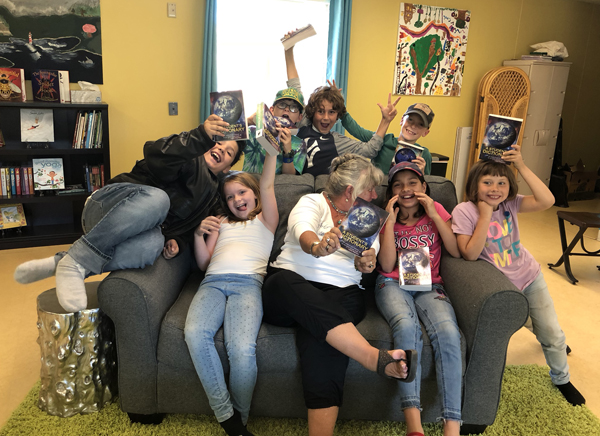
In September, Rotary distributed 43 dictionaries/resource books to the 3rd Grade classes at Patagonia Elementary, the Patagonia Montessori and Elgin Schools. Members of Rotary spend a half hour with each class, interacting with the kids and showing them all the amazing resources within the book, which is so much more than a dictionary.

Mountain Empire Rotary donates dozens of high quality hardcover books to the schools as part of their Birthday Books program. Through the program, every student is gifted a beautiful book, compliments of The Mountain Empire Rotary Club, on their birthday.

Each month the organization honors and awards a student at Patagonia Union High School with $100 as the Student of the Month. Students must either demonstrate the following Six Pillars of Characters criteria on an ongoing basis or they must have achieved an award-worthy accomplishment that falls into the criteria:

  • Trustworthiness (Integrity, Honesty, Reliability, Loyalty)
  • Respect (Golden Rule, Tolerance & Acceptance, Nonviolence, Courtesy)
  • Responsibility (Duty, Accountability, Pursue Excellence, Self Control)
  • Fairness (Fairness & Justice, Openness)
  • Caring (Concern for others, Charity)
  • Citizenship (Do Your Share, Respect Authority and Law)

The Mountain Empire Rotary club completed construction of a community park at the Sonoita Fairgrounds. Named The Fred Sang Memorial Rotary Park in honor of Fred Sang, a Rotarian, entrepreneur and community leader who passed this year, the park includes covered picnic areas with ramadas and gardens with breathtaking views of the surrounding mountains. There will be a Grand Opening Celebration in the near future.

The Mountain Empire Rotary club is hosting its First Annual “Ride to End Polio” in coordination with the Tour De Tucson on November 14th, with a bike ride from The Fred Sang Memorial Rotary Park in Sonoita to Patagonia. If you’d like to learn more about First Annual “Ride to End Polio” or engage with the youth of The Mountain Empire, please contact Susan Scott, Membership Director, 520-455-4713.

The Mountain Empire Rotary Club became a sponsor during Mat Bevel Company’s “Building Our Universe Together” campaign to help students find new ways to problem-solve and contribute to their local communities. To learn more about The Mountain Empire Rotary Club’s activities at their Facebook page.
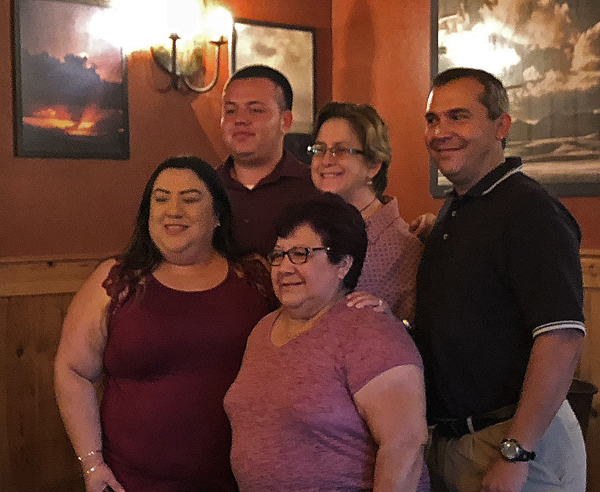
The Mountain Empire Rotary club emphasizes the values of leadership and activism in the community’s youth while providing opportunities that encourage students to grow and demonstrate leadership.
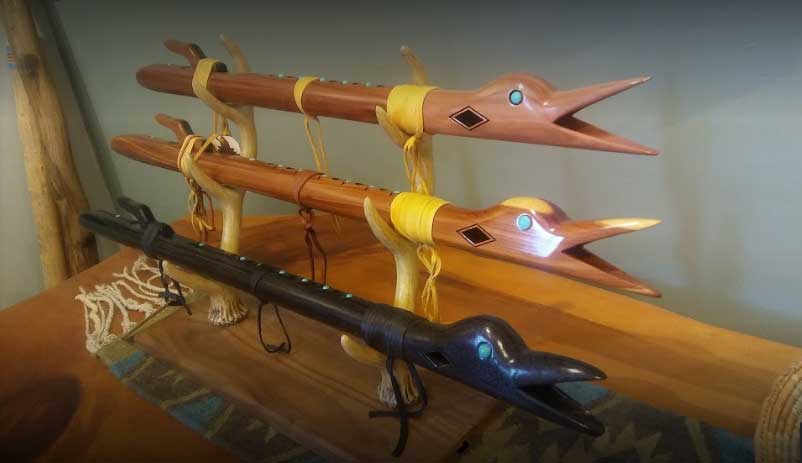

SPONSOR HIGHLIGHT: High Spirit Flutes, Wood Handcrafted Native Flutes

SPONSOR HIGHLIGHT: High Spirit Flutes, Wood Handcrafted Native Flutes

Odell Borg founded High Spirits Flutes in 1990 in the then quaint town of Solana Beach, Southern California. These Native Flutes are crafted from a solid piece of the finest cedar, walnut, birch and other fine domestic plantation-grown woods or recycled lumber. They’re finished with a specially formulated non-toxic oil that protects and seals each flute giving it a warm, clear voice.

According to Odell, “From day one I have taken great pride in upholding the MADE IN THE USA tradition of craftsmanship. We are committed to being green-minded and using non-toxic materials.

The Native Flute came into Odell Borg’s life when he received one as a Christmas gift in 1988. He had never played an instrument before, and as he soon discovered that he enjoyed playing the flute. He says, “It quickly became my close and comforting friend.”

The inspiration to create a flute came in 1990 while he was going through a very difficult time in his life. A good friend reminded Odell that he had always been a craftsman and encouraged him to explore making the flute, since the instrument brought him so peace and comfort. This idea struck a chord with him.

Every High Spirit Flutes’ flute comes with a How-To-Play Instructional DVD and Booklet to help people of all musical skill levels learn how to successfully play. High Spirit Flutes also sells a variety of Native Flute accessories including flute bags, cases, stands, song books, Native Flute CD projects, as well as more advanced Native Flute instructional materials.

Odell Borg, owner of High Spirit Flutes

Today, High Spirit Flutes is located in Patagonia, Arizona and sends flutes throughout the US as well as Europe and Asia.

High Spirit Flutes is a 2018-2019 Mat Bevel Company educational sponsor. Odell says, “We are excited that The Universe Within world-building course is part of our local public school’s curriculum. It’s so important that young people learn techniques to help them solve problems with much greater imagination.”

Thank you High Spirit Flutes for supporting educational curriculum that helps students learn how to think more creatively!

Learn more about High Spirit Flutes.

SPONSOR HIGHLIGHT: William Taft, Biologist and Renowned Entomologist

SPONSOR HIGHLIGHT: William Taft, Biologist and Renowned Entomologist

William (Bill) H. Taft Jr. is a retired biologist for the State of Michigan. He was employed by the state for 25 years where most recently he served as a senior aquatic biologist in the Water Bureau.

He actively collects clear-wing moths throughout North America and publishes on the subject. A collector since 1968, he’s known for identifying rare and unknown Sesiidae (clear wing) moths throughout North America.

Bill has followed and supported Ned Schaper and the Mat Bevel enterprise for the last 20 years. He explains, “I support Mat Bevel Company because the organization promotes Ned’s artwork which is unique. The theater, museum, school and video production involve a lot of science, and as a scientist I believe people need to know about physics, they need to know how to work with materials and make things. Plus, I think the work is clever. There isn’t that much stuff out there that is clever.”

Mat Bevel Company Educational Sponsor William (Bill) H. Taft Jr. is an entomogologist who’s known for identifying rare and unknown Sesiidae (clear wing) moths in North America. The moth image above is Carmenta wildishorum (Taft & Cognato).

Bill believes that Mat Bevel Company can help young people learn about science in a subtle way. The physical science of the museum is blended with theater and inspiring characters to make learning engaging and entertaining. Students get exposed to science, technology and engineering in a way they haven’t been before.

Bill says, “Whether it Bevelvision video footage, the Museum Of Kinetic Art or classes and workshops from the School of Intuition that teach people how to put things together, it only takes one exposure to change someone’s life.”

Bill had a powerful experience himself when he was young. He connected with a professional biologist who worked for the State of Michigan whose passion was for Michigan butterflies and moths. This gentleman became Bill’s mentor and it changed everything for him.

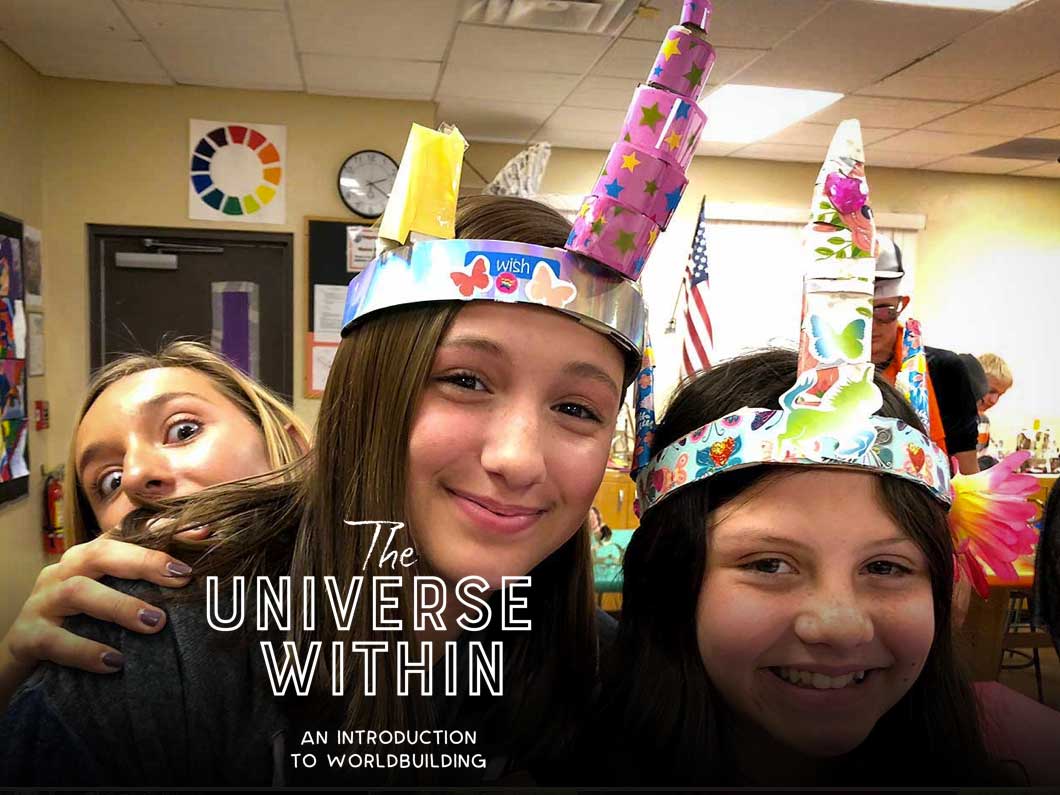
The Universe Within world-building course holds particular promise for Bill. Classes provide hands-on learning and participation where students design and create elements of their world in two-, three and four-dimensions—using a scientific sketchbook to capture their unique ideas, while making sculptural helmets and kinetic replicas from their worlds.

Bill lives in Michigan with his wife Barbara Kennedy and their English lab Luna.

Bill is certain that this type of problem-solving and discovery which integrates science, technology, theater and storytelling provides something that students will not get elsewhere. Exposure to new ways of thinking is how businesses and organizations succeed. The Universe Within has the potential to prepare students for careers as well as connect them to the physical world, something that’s especially important in the digital age we live in.

Bill’s hope is that the Mat Bevel Company enterprise will continue to become more successful. “Let’s face it. We don’t know where things will lead until you get there, but you can’t get there until you do something. In this case, interacting with students in school, is a great next step. The Universe Within is worthwhile because it’s both educational and inspirational. You don’t get that often in a class.”

Bill believes that the more people who are exposed to Mat Bevel Company’s kinesthetic approach to learning, the more likely they are to be successful and find something they enjoy in life. Bill says, “This is how people find their first career or get second careers….they discover something more interesting. They get their hands on it. They’re not just reading about the subject, the great people are doing it!”

With all the distractions today, from social media and video games, many young people do not find the time to think more deeply. As Bill says, “The greatest scientists thought about a problem they were going to solve. They understood that if they didn’t do it, who else was going to do it?”

Bill understands that the people who are unique and have novel ideas take the time to think about the world, and to solve problems.

Museum Of Kinetic Art Virtual Reality Tour is Live!

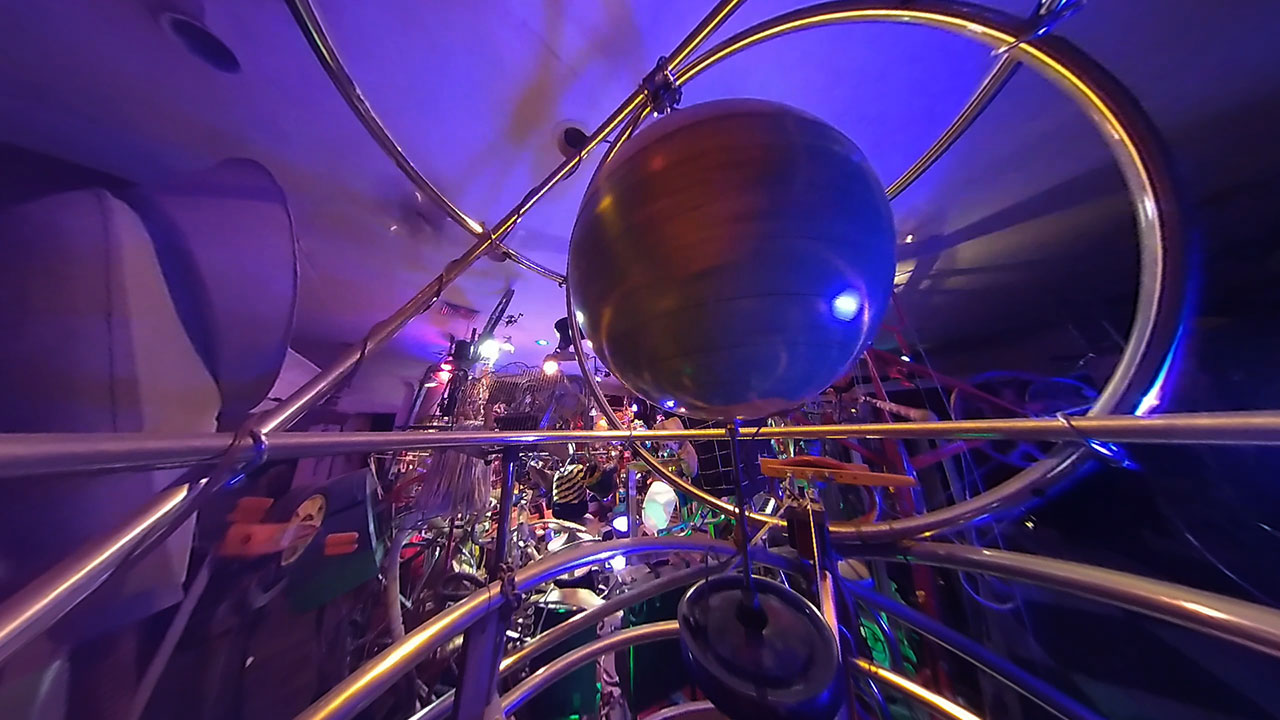
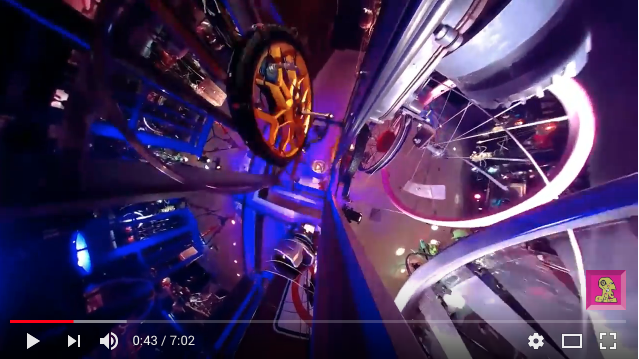
In 2017, Ned Schaper received an artist research and development grant from Arizona Commission on the Arts to support development of the Museum Of Kinetic Art (MOKA) into a 360-degree virtual reality tour. Over the last year and a half, he’s been experimenting, learning and producing a tour so that people anywhere can enjoy the Museum Of Kinetic Art. Approximately 7 minutes from start to finish, the tour allows viewers to feel as if they are inside the museum and get a close look at many of the mechanized characters. The tour is now live on YouTube: https://youtu.be/L8U0pFU1hHg. Footage is also being used in classroom videos for The Universe Within, a creative thinking and world-building course developed by Mat Bevel Company. Ned’s original idea was to put a virtual reality camera on a motorized cart and move it through the museum as a person would walk through the space. But after purchasing and experimenting with a 360fly virtual reality camera, he realized the images were far more interesting when you put the camera inside the sculptures. He explains, “It looks like you’re in a city of skyscrapers. It makes the viewer feel like he/she is a small entity inside a giant warped universe of junk.” So instead of moving the camera like a normal virtual reality tour where the viewer controls the experience, for example using goggles, the camera stays still, Ned controls the virtual reality output, creating a final video piece as a normal HD video.
Ned got the idea to build kinetic devices to move the camera while in “Watch Me” editing mode. The first thing he tried was a turntable that made the camera slowly turn in a circle. He says, “This world of rotating sculptures reminded me of a spiraling galaxy of junk sculpture stars.” This gave him the idea to set the whole room of sculptures into a circular installation, packed with all the sculptures and lights in one small area with the camera right in the center. You’ll easily pick this effect up in the video. Ned went to work creating this circular installation while shooting from the same camera position. Once the installation was complete, and he got the shot he was looking for, he then began moving the camera around close to the sculptures without the rotating turntable making use of the bizarre fish-eye effect. When he started the project, the Museum Of Kinetic Art occupied the entire space, but after he built this installation, the museum was packed into a smaller circular area.
With many years’ experience shooting and editing video, the virtual reality technology represented a major step forward for his art. The project substantially expanded his knowledge of how to use virtual reality technology, how to move the camera in new ways and how to capture localized sound. The three cameras give Ned a whole new context and narrative for his theater’s world of Beveldom. This helped him establish the look and feel of Beveldom as a space junk experience in a galaxy of kinetic art stars. Ned says, “One interesting aspect of the 360fly is how it changes what’s desired for the ceiling. With 360fly the ceiling is such a big part of it, you want to work with what’s above.” This project changed his artistic path. Experimenting with the new 360fly camera technology gave him an internal perspective on the museum. It led him to design a new 360 Theater for the future, in a new location where he can combine a live and a virtual theater with a virtual reality camera in the center of a circular stage. The theater set will help establish the look and feel of Beveldom—”the galaxy of junk”—with a full sphere of kinetic sculpture and light.
Addressing A National Creative Deficit At A Grassroots Level

Addressing A National Creative Deficit At A Grassroots Level

A Nation-wide Creativity Crisis

In Dr. KH Kim’s “The Creativity Crisis (2011)”, she reported that American creativity declined from the 1990s to 2008. Kim’s 2017 Creativity Crisis Update: How High-Stakes Testing Stifles Innovation reveals that “The Creativity Crisis” has grown worse since 2008. The results also reveal that the youngest age groups have suffered the greatest.
SOURCE: http://www.creativitypost.com/education/the_2017_creativity_crisis_update_how_high_stakes_testing_has_stifled_innov

The significant declines in outbox thinking skills (fluid and original thinking) indicate that Americans generate not only fewer ideas or solutions to open-ended questions or challenges, but also fewer unusual or unique ideas than those in preceding decades (Figure 1).

According to Dr. Ken Robinson, one of the world’s most influential voices in education, our schools are killing creativity

“America is now facing the biggest challenge it’s ever faced—to maintain its position in the world economies. All these things demand high levels of innovation, creativity, and ingenuity. At the moment, instead of promoting creativity, I think we’re systematically educating it out of our kids.”

SOURCE: http://www.ascd.org/publications/educational-leadership/sept09/vol67/num01/Why-Creativity-Now%C2%A2-A-Conversation-with-Sir-Ken-Robinson.aspx

One of the world’s top business thinkers, Dr. Teresa Amabile’s Theory of Creativity outlines three components necessary for an individual to acquire creativity, defined as the production of ideas or outcomes that are both novel and appropriate to some goal:

  • Expertise
  • Creative thinking skills
  • Motivation

SOURCE: http://www.hbs.edu/faculty/Publication%20Files/12-096.pdf

A Grassroots Solution

The Universe Within is a world-building course developed by Mat Bevel Company to help solve this national creative thinking deficit at a grassroots level. Coursework integrates Mat Bevel Company President and Founder Ned Schaper’s magical world of Beveldom and his Available Resource Technology (A.R.T.) practices. Students learn how to innovate, problem-solve and navigate unknown situations through original thinking exercises and out-of-the-box approaches.

Students stretch their imagination during classes by watching footage from Beveldomthe museum’s whirling fine-art sculptures and the theater’s funny characters. Classroom instruction teaches students how to capture, connect, test and activate their original ideas through a series of classes: The Daily Doodle, Corrugated Headgear, Story Book and Pedestrian Carnival. 

Students play the part of a central character in a unique imaginary world of their own making all while learning art, science and English language arts lessons.

With the addition of The Universe Within TV show that will launch in the fall of 2018 in partnership with Creative Tucson. new inspirational educational programming will be used in the classroom and for long-distance learning.